Discuss Your Situation
For B2B Owners & CEOs

Smarter Decisions for B2B Owners

When the situation in the business is unclear, more activity does not always lead to a better result.

I help you:

  • see the real picture,
  • test your assumptions,
  • set the priority,
  • make a stronger management decision.
How it works ↓
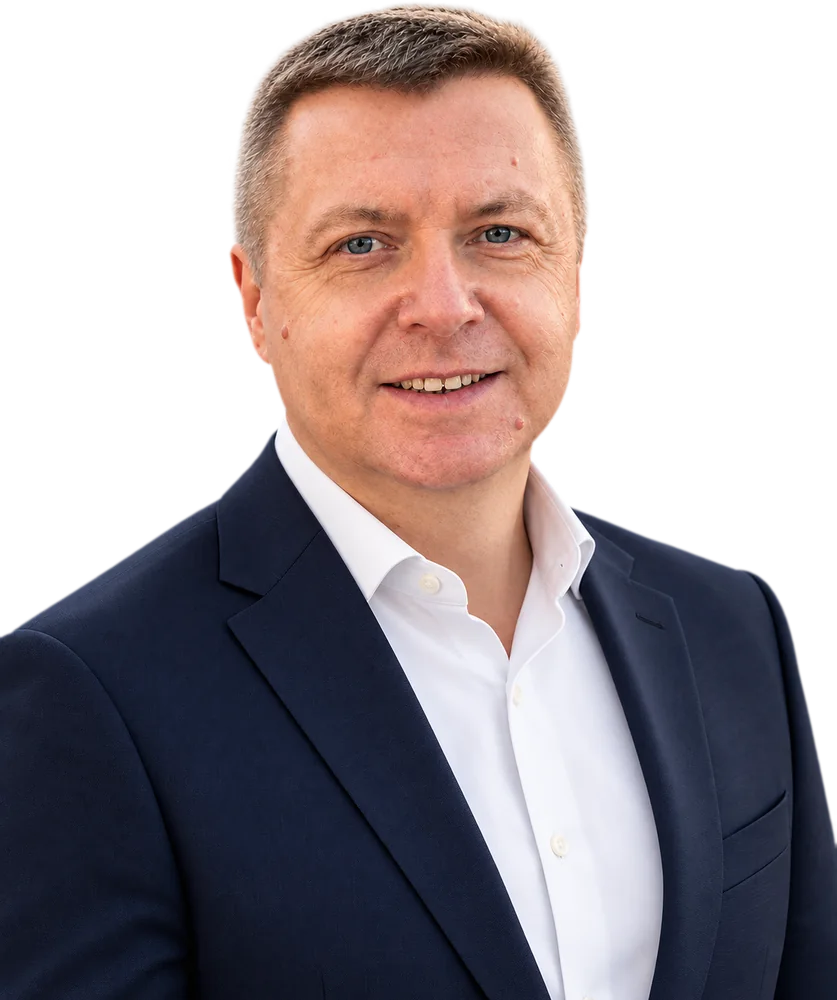
Andriy Lagutin, founder of X2X5X10
Situation

Not every problem needs more action

Sales have slowed. There are several growth options. The team is proposing different solutions. You need to decide where to invest money, time and management attention. In situations like these, the problem is often not a lack of ideas. The problem is understanding what is really happening — and which decision needs to be made first.

THE REAL SITUATION IS UNCLEAR

The owner sees sales, reports and the team's opinions — but not always the full market, customers, alternatives or the real reasons behind what is happening.

TOO MANY OPTIONS

A new market? A new product? More leads? A team change? Every option requires resources. Not every option deserves priority.

THE COST OF THE WRONG DECISION

Sometimes the biggest loss is not that the company is doing too little. It is spending months investing resources in the wrong problem.

SELECTED CASES

Some of our projects and results.

See the cases →
The X2X5X10 Approach

From situation to a smarter decision

Before accelerating execution, the business needs to make sure it is solving the right problem. X2X5X10 does not begin with a ready-made answer. First: reality. Then: priority. Only then: action.

X2

SEE WIDER

Separate facts from assumptions and look beyond the company's internal view of the situation.

X5

CHECK DEEPER

Market, customers, economics, team and processes — depending on the decision that needs to be made.

X10

IDENTIFY WHAT MATTERS MOST

Compare alternatives, risks and potential to identify the priority that deserves resources.

MAKE THE DECISION

Not a list of recommendations. A clear answer: what we do, why this is the priority, and what we are not doing now.

See ways to work together →
Where I Can Help

Situations where an outside perspective matters

I work on questions where the owner's decision has a real cost — in money, time, people or missed opportunities.

01

MARKET & OPPORTUNITY

Do we see the real market?

Real market size, potential customers, segments, territories, channels, competitors and opportunities that do not appear in the CRM.

02

GROWTH & PRIORITIES

Where should we invest resources?

When several opportunities compete for attention, I help compare scenarios and identify which direction makes the most sense for the business now.

03

BUSINESS SYSTEM

What still depends on the owner?

Decisions, processes and controls that should not depend continuously on one person.

04

TEAM & TRANSFORMATION

Can the organisation execute the decision?

Roles, management practices, team development, corporate academies, onboarding and the changes required for the next stage of the business.

Selected Cases

Different situations, different decisions

A channel that will not sell the product. A market the CRM cannot see. Knowledge that depends on individual people. Company names are not disclosed under NDA.

Channel Influence | Interim Leadership

When the channel will not sell your product

Scattered independent stores → a network of its own inside the channel
200+
outlets in the company's own network nationwide
<1 yr
to launch the network

The product sold almost everywhere, but specialist pet stores did not want to list it. The answer was not to change the range, but to earn a position inside the channel.

The owner's question
How can the company grow sales and shelf share in a channel of independent stores that rejects its product?
The decision
Together with distributors, build a specialist network of its own inside the channel, meant to become an example for other outlets and help strengthen the positioning of the company's brands.
More details

Situation. Owners of specialist stores argued that if the same range was already sold in kiosks and retail chains, it did not belong in their channel. They demanded separate products for their segment. The company did not plan to change its range policy.

What was tested. As interim leader, I analysed the market, its participants and the company's resources. The product needed proper shelf space, a planogram and recommendations from trained staff in stores — in other words, influence inside a channel made up of independent stores.

The alternative. The obvious option was to buy out the existing outlets. But the channel was not centralised: it was a scattering of independent stores, so a buy-out would not have given control. The logical step was to become part of the channel.

Why it works. A structured network that buyers can easily understand supports not only the range but also pricing. Consultants with professional training shape recommendations. This is how a company can become an opinion leader in its channel.

Result. In under a year, more than 200 outlets were opened nationwide. In these outlets the product received proper shelf space and accounted for the majority of each outlet's revenue. The company increased its presence and sales in the channel, and its own network became a visible part of it.

When a channel will not sell your product, the question is not always a new range. Sometimes you need to earn a position inside the channel from which you can influence sales.

channel rejection → market analysis → own network with distributors → 200+ outlets → influence in the channel

Delivered as interim leader. The number of outlets is rounded. Results depend on the market, the situation and the resources of the specific company.

Market Visibility Map | Executive Decision Review

When partners are in place but the market is only partly covered

Filled — customers covered, outlined — not covered
+530
opportunities identified among 1,478* potential companies
≈14M
UAH of estimated potential

For 5 years the company has grown by only 10% a year, and that is not enough. The team explains: there is nowhere left to sell — everyone already buys from us. Active customers: 183 out of 1,478* potential companies.

The owner's question
Can additional sources of growth be found in the existing market? What should the team focus on when it insists that we already sell to everyone?
The decision
Describe the sales channels, structure channels and segments, run an ABCD analysis of existing customers and change the team's priorities. Do the work together with the team and partners (dealers).
More details

Situation. For five years the company grew by only 10% a year. The team explained that there was no one left to sell to: everyone already works with the company. This could be tested by comparing the CRM with a real market map.

What was checked. The comparison showed a very different scale of opportunity: customers, segments and territories missing from the company's internal view. Three things were compared: which customers the company wants to reach, whom it already works with regularly — directly or through partners — and who remains outside coverage, and why. The cause of the gap can differ: the partner does not work with these customers, the right range is missing, supply terms are unattractive, or the customers are not a fit for the product. The cause determines the choice: strengthen the current partner, find another, change the offer, or drop an economically unattractive direction. On this basis the RTM (Route-to-Market — the supply model) was rebuilt.

Result. +530 opportunities were identified among 1,478* potential companies, with an estimated potential of ≈UAH 14M. The team's priorities were changed.

Having a partner ≠ covering the market. This is not yet an order. It is a basis for choosing where to direct the team, time and money.

CRM → market map → +530 → priorities → ≈UAH 14M

*1,478 potential companies were identified through market mapping in this completed project; +530 opportunities were identified for further prioritisation. These figures are project-specific and are not a forecast of sales or revenue.

Training System | Interim Leadership

When a new hire learns only on the job

Knowledge in chats and heads → one company training system
10 → 7
months for a sales manager to reach plan
2
countries with one Academy, knowledge base and LMS

An engineering and technology business where training is the main competitive advantage. Managers trained newcomers instead of working with customers. A newcomer spent 6 months learning at the company's expense and reached plan only after 10.

The owner's question
How do we build a training system so that people reach results faster and it does not depend on managers' spare time? How do we do this for two different countries with the same quality?
The decision
Describe the business processes, the Customer Journey and the customer interaction process, assemble a single knowledge base with an update system, build a corporate Academy on an LMS with learning tracks for different specialists, and set up certification and attestation for key managers.
More details

Situation. There were attempts to build a training system, but it rested on managers rather than on a process. There were many documents, but they were unstructured and not kept up to date, so finding the right one was hard. There was no single certification system and no staff development at different stages. Training newcomers took managers' time that should have gone to working with customers.

Result. Managers started working with customers from month 3 and reached plan in 7 months instead of 10. The time of managers who used to train newcomers was freed up. Documented business processes and the Customer Journey, a single knowledge base, an Academy and a certification system appeared; the system is live in two countries under one standard.

Customer Journey stages were linked to the responsibilities of different functions to reduce cross-functional gaps and prevent customer problems before they occurred.

processes → Journey → knowledge base → Academy → 2 countries

Delivered as interim leader. Results depend on the market, the situation and the starting data of the specific company.

How I Work

From the owner's question to an evidence-based decision

01

Define the decision

We do not begin with a ready-made answer. We begin with the question: what decision actually needs to be made? We define the situation, objectives, constraints and assumptions that influence the choice.

02

Test reality

We gather the facts required for this specific decision: market, customers, economics, team or processes. Fact → Hypothesis → Signal → Conclusion. For key conclusions, we define the confidence level.

03

Compare alternatives

We do not look for one "correct recommendation". We compare several possible scenarios — their potential, risks, required resources and consequences. The result is clarity on what should be prioritised and what should not be done yet.

04

Move to action

The decision becomes a concrete next step: go / no-go → priority → action. Where needed, I stay with the team through implementation, a 90-Day Sprint or further system transformation.

The goal is not another report. The goal is a smarter decision that can be translated into action.

How X2X5X10 tests decisions before the business commits resources to action.

View Owner Manual
Ways to Work Together

From one important decision to systemic business transformation

One decision path. Eight ways to engage.

Seven stages explain how a decision can progress. The eight formats below give owners a relevant way to enter that path.

Decision Path stage What the stage means Ways to engage
01 Understand Clarify the situation and the decision Business Clarity
02 See See the real market and available opportunity Market Visibility Map
02–03 See / Decide Test a segment, market or growth direction Segment Opportunity Scan
03 Decide Choose or independently validate a decision Go / No-Go Decision; Executive Decision Review
04 Validate Run a controlled first test before scaling Pilot logic inside a scoped engagement / 90-Day Sprint; not a separate offer
05 Execute Move an approved decision into controlled action 90-Day Sprint
06 Build Reduce owner dependency and strengthen management Corporate Operating System
07 Retain Keep knowledge, standards and experience in the company Corporate Academy & Knowledge System (stage concept: Corporate Intelligence)
Clarity
01

Business Clarity

When you need to understand what is really happening.

More details

We separate facts from assumptions, define the problem and clarify which decision needs to be made.

Result: clarity on the situation, key hypotheses, questions to test and the next step.

Decisions
02

Go / No-Go Decision

When you need to choose between several options, investments or initiatives.

More details

We compare the potential, risks, required resources and consequences of the alternatives.

Result: an evidence-based decision on what to launch, what to postpone and what to stop.

03

Executive Decision Review

When an owner or CEO needs an independent view on an important management decision.

More details

We test the logic, evidence, risks and assumptions that may have remained invisible inside the business.

Result: a smarter decision before money, time and team capacity are committed.

Market & Opportunity
04

Market Visibility Map

When the company sees its sales but not the full available market.

More details

Potential customers, segments, territories, channels, competitors and unused opportunities. Where relevant, the analysis includes Numerical Distribution and Route-to-Market.

Result: a real market map and clear development priorities.

05

Segment Opportunity Scan

When you need to test a new segment, market or growth direction.

More details

We assess potential, the competitive environment, risks and possible entry scenarios.

Result: 3–5 scenarios, evidence, risks, priorities and a recommendation for the decision.

Implementation
06

90-Day Sprint

When the decision has been made and needs to move into controlled execution.

More details

Priorities, ownership, milestones, management rhythm and work with the team.

Result: the decision moves from presentation to execution with clear actions and accountability.

Management System
07

Corporate Operating System

When the business depends too heavily on the owner's constant involvement.

More details

Roles, accountability, decision-making processes, management rhythms, controls and team interaction.

Result: lower owner dependency and a management system that can operate more consistently without constant owner intervention.

Corporate Intelligence
08

Corporate Academy & Knowledge System

When critical company knowledge remains in individual people's heads, chats and files.

More details

Corporate Intelligence is a system of knowledge, processes, standards and accumulated experience that does not depend on specific individuals. We build one system for corporate knowledge, standards, onboarding and development — including processes and instructions, onboarding, learning materials, testing and certification, cases and best practices, management approaches and accumulated company experience.

Result: faster onboarding, common standards, less dependency on individual knowledge and a stronger foundation for scaling.

The format follows the question — not the other way around. From one difficult decision to market visibility, implementation, a management system or corporate intelligence.

Who It Is For

When does it make sense to work together?

Good fit

  • ✓ You are an owner or CEO of a B2B company
  • ✓ You face an important decision or several competing scenarios
  • ✓ You need an independent perspective and evidence-based validation
  • ✓ You are ready to involve the team and provide the necessary data

Not a fit

  • × You need a quick opinion without going into the situation
  • × You only want confirmation of a decision that has already been made
  • × You are looking for execution-only support rather than a decision partner
About

Andriy Lagutin

Andriy Lagutin, Founder of X2X5X10

Andriy Lagutin

Founder of X2X5X10 · Entrepreneur · Interim Executive · Advisor to B2B Owners

I help B2B owners make smarter decisions when growth has slowed, the business needs stronger management control, or change must be implemented without losing momentum.

My experience combines corporate management, B2B sales, market development, entrepreneurship, interim management and transformation projects.

At Mars Inc., I progressed from field sales to national commercial leadership roles across key accounts, sales, trade marketing and business development.

After my corporate career, I became an owner and CEO of my own businesses: launching companies, building teams, sales and management systems, and developing new business directions.

As an interim executive, I have worked inside businesses: entering the situation quickly, setting priorities, helping teams implement change and carry it through to results.

I am also a Board Member of the international Interim Business Association (IBA).

At X2X5X10, I bring this experience together to help owners see the situation more broadly, test assumptions with evidence, identify the main priority and move from decision to execution.

Mars Inc. Entrepreneur / CEO Interim Executive Change Management IBA Board Member
Next Step

Is there a decision you need to test?

Briefly describe the situation and the decision you need to make. I'll tell you whether I can be useful.

I'll reply within one business day

Please enter your name.

Please enter the company name.

Please add a short description.

Please enter an email address or Telegram username.

Consent to personal data processing is required.

Discuss Your Situation